Katie Beckett & TEFRA: Medicaid for Kids With Disabilities, Regardless of Parent Income
Updated August 2026
If a caseworker, doctor, or school told you your child needs Medicaid to get a waiver — a DDA waiver, an Autism Waiver, a developmental disability waiver — and you're wondering how that's possible when your household income is too high for regular Medicaid, there's a specific answer: the Katie Beckett provision, also called the TEFRA option. It lets a state evaluate only the child's own income, not the parents', for exactly this situation.
1982
the year TEFRA created this pathway
18 states + DC
have the formal TEFRA/Katie Beckett option
$0
parent income counted under Katie Beckett/TEFRA
All 50 + DC
offer some form of income-disregard pathway
What is Katie Beckett / TEFRA?
Katie Beckett was a young girl who spent the first three years of her life in a hospital on a ventilator. Her parents had jobs and insurance, but no insurance plan would cover the home nursing care she needed to live at home — and moving her home would have made her ineligible for Medicaid, which at the time only paid for institutional care. In 1982, the Reagan administration granted her a specific exception, which Congress then codified into law as part of the Tax Equity and Fiscal Responsibility Act (TEFRA) of 1982.
The rule the law created is simple in concept: when a child has a disability severe enough that she'd otherwise qualify for care in a hospital, nursing facility, or intermediate care facility, but can safely be cared for at home instead, a state can determine her Medicaid eligibility using only her own income and assets — not her parents'. Since most children have no income of their own, this means the vast majority of kids who qualify medically also qualify financially, no matter what their parents earn.
This is often called "institutional deeming," and it's the same underlying legal concept whether a state implements it as a formal TEFRA/Katie Beckett state plan option or builds it into a children's HCBS waiver instead (more on that distinction below).
Does my child need Medicaid to get a waiver like DDA or an Autism Waiver?
Yes. A "DDA waiver," an "Autism Waiver," a "Developmental Disability waiver" — whatever your state calls it — is a Medicaid Home and Community-Based Services (HCBS) benefit. It's not a separate insurance program; it's extra services layered on top of Medicaid coverage, funded under Medicaid's 1915(c) waiver authority. Your child has to have a Medicaid eligibility category before a state can enroll her in the waiver itself.
DDA specifically refers to the "Developmental Disabilities Administration" (or "Agency") — the name several states, including Maryland and Washington, use for the state office that runs their developmental disability HCBS waivers and related services. DDA isn't itself a Medicaid eligibility category; it's the agency that administers Medicaid-funded waiver services once your child has a qualifying Medicaid category to build on.
What if we "make too much" to qualify?
This is exactly the scenario Katie Beckett/TEFRA — or its waiver equivalent — exists to solve. Regular Medicaid for a minor child normally counts the whole household's income until the child turns 18. That rule is what disqualifies a lot of two-income, middle-class families whose child still has real, expensive medical or developmental needs.
Under Katie Beckett/TEFRA (or a waiver using institutional deeming), the state instead asks two separate questions: does the child meet a hospital, nursing facility, or intermediate care facility level-of-care requirement based on her disability, and does the child's own income and assets — as a household of one — fall under the limit. Since children rarely have significant income or assets of their own, most kids who clear the disability/level-of-care bar clear the financial bar too, regardless of what their parents earn.
Many states use 300% of the SSI federal benefit rate — $2,982/month in 2026 — as that income test, the same standard commonly used for adult HCBS waiver eligibility. Some states set the standard lower; a couple set it higher. A handful of states also charge a monthly cost-of-care fee scaled to family income and size once a child is enrolled this way — it isn't a barrier to eligibility, but it's worth asking about upfront.
The core idea in one sentence
If your child's disability is severe enough to qualify for institutional-level care, your income stops being the obstacle — the state is legally allowed to look at your child's income alone.
Two different ways states provide this — and why it matters
States reach the same result — parental income doesn't disqualify the child — through two different mechanisms, and the difference matters for what you should expect:
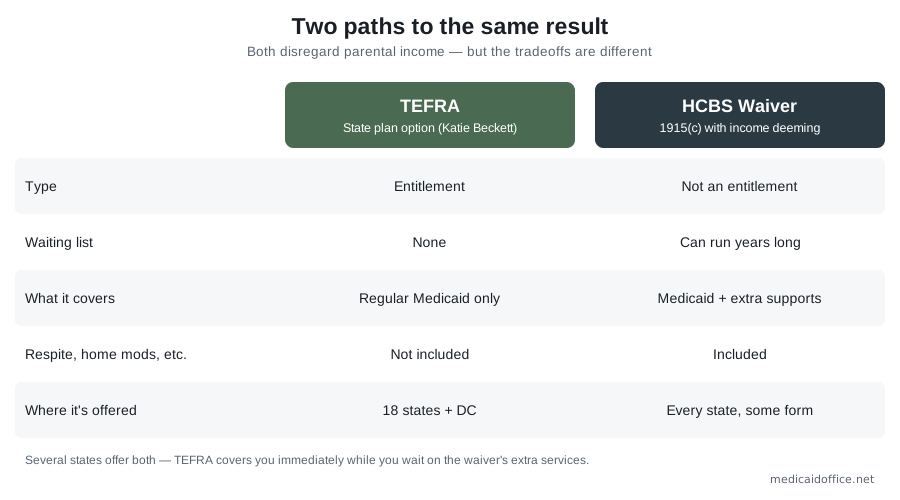
- TEFRA/Katie Beckett state plan option (SPA) — an entitlement. If your state has formally adopted it, the state must serve every child who qualifies; there is no waiting list. The tradeoff: it only extends regular state Medicaid plan services (doctor visits, hospital care, prescriptions) — it doesn't add the extra HCBS supports (respite care, home modifications, behavioral services) that a waiver provides.
- HCBS 1915(c) waiver with institutional deeming — extra services, but not guaranteed. A qualifying HCBS waiver (an Autism Waiver, a DD/ID waiver, a medically fragile waiver, etc.) both disregards parental income for eligible children and adds services beyond what regular Medicaid covers. The tradeoff: 1915(c) waivers are not entitlements, so states can — and often do — run waiting lists, sometimes for years.
Several states offer both: the TEFRA option gets a child onto Medicaid immediately with no wait, while she's also on the waitlist for a waiver that would add the extra services. That combination is worth asking your state Medicaid agency about directly, since it isn't always advertised as an option.
Which states have the formal TEFRA/Katie Beckett option?
Per a Kaiser Family Foundation 50-state Medicaid eligibility survey, 18 states plus DC have adopted the formal TEFRA/Katie Beckett state plan option. Every other state achieves largely the same outcome by building institutional deeming into a children's HCBS waiver instead — meaning some version of this pathway exists nationwide, even though the mechanism and the name your state uses for it varies.
| State | How it's provided |
|---|---|
| Alabama | HCBS waiver |
| Alaska | TEFRA state plan option (SPA) |
| Arizona | HCBS waiver |
| Arkansas | HCBS waiver |
| California | HCBS waiver |
| Colorado | SPA and HCBS waiver |
| Connecticut | HCBS waiver |
| Delaware | TEFRA state plan option (SPA) |
| District of Columbia | TEFRA state plan option (SPA) |
| Florida | HCBS waiver |
| Georgia | TEFRA state plan option (SPA) |
| Hawaii | HCBS waiver |
| Idaho | TEFRA state plan option (SPA) |
| Illinois | HCBS waiver |
| Indiana | HCBS waiver |
| Iowa | TEFRA state plan option (SPA) |
| Kansas | HCBS waiver |
| Kentucky | HCBS waiver |
| Louisiana | HCBS waiver |
| Maine | TEFRA state plan option (SPA) |
| Maryland | HCBS waiver |
| Massachusetts | TEFRA state plan option (SPA) |
| Michigan | HCBS waiver |
| Minnesota | TEFRA state plan option (SPA) |
| Mississippi | TEFRA state plan option (SPA) |
| Missouri | HCBS waiver |
| Montana | HCBS waiver |
| Nebraska | SPA and HCBS waiver |
| Nevada | TEFRA state plan option (SPA) |
| New Hampshire | TEFRA state plan option (SPA) |
| New Jersey | HCBS waiver |
| New Mexico | HCBS waiver |
| New York | SPA and HCBS waiver |
| North Carolina | HCBS waiver |
| North Dakota | HCBS waiver |
| Ohio | HCBS waiver |
| Oklahoma | TEFRA state plan option (SPA) |
| Oregon | HCBS waiver |
| Pennsylvania | HCBS waiver |
| Rhode Island | SPA and HCBS waiver |
| South Carolina | TEFRA state plan option (SPA) |
| South Dakota | TEFRA state plan option (SPA) |
| Tennessee | HCBS waiver |
| Texas | HCBS waiver |
| Utah | HCBS waiver |
| Vermont | TEFRA state plan option (SPA) |
| Virginia | HCBS waiver |
| Washington | HCBS waiver |
| West Virginia | TEFRA state plan option (SPA) |
| Wisconsin | HCBS waiver |
| Wyoming | HCBS waiver |
Alabama
- How it's provided
- HCBS waiver
Alaska
- How it's provided
- TEFRA state plan option (SPA)
Arizona
- How it's provided
- HCBS waiver
Arkansas
- How it's provided
- HCBS waiver
California
- How it's provided
- HCBS waiver
Colorado
- How it's provided
- SPA and HCBS waiver
Connecticut
- How it's provided
- HCBS waiver
Delaware
- How it's provided
- TEFRA state plan option (SPA)
District of Columbia
- How it's provided
- TEFRA state plan option (SPA)
Florida
- How it's provided
- HCBS waiver
Georgia
- How it's provided
- TEFRA state plan option (SPA)
Hawaii
- How it's provided
- HCBS waiver
Idaho
- How it's provided
- TEFRA state plan option (SPA)
Illinois
- How it's provided
- HCBS waiver
Indiana
- How it's provided
- HCBS waiver
Iowa
- How it's provided
- TEFRA state plan option (SPA)
Kansas
- How it's provided
- HCBS waiver
Kentucky
- How it's provided
- HCBS waiver
Louisiana
- How it's provided
- HCBS waiver
Maine
- How it's provided
- TEFRA state plan option (SPA)
Maryland
- How it's provided
- HCBS waiver
Massachusetts
- How it's provided
- TEFRA state plan option (SPA)
Michigan
- How it's provided
- HCBS waiver
Minnesota
- How it's provided
- TEFRA state plan option (SPA)
Mississippi
- How it's provided
- TEFRA state plan option (SPA)
Missouri
- How it's provided
- HCBS waiver
Montana
- How it's provided
- HCBS waiver
Nebraska
- How it's provided
- SPA and HCBS waiver
Nevada
- How it's provided
- TEFRA state plan option (SPA)
New Hampshire
- How it's provided
- TEFRA state plan option (SPA)
New Jersey
- How it's provided
- HCBS waiver
New Mexico
- How it's provided
- HCBS waiver
New York
- How it's provided
- SPA and HCBS waiver
North Carolina
- How it's provided
- HCBS waiver
North Dakota
- How it's provided
- HCBS waiver
Ohio
- How it's provided
- HCBS waiver
Oklahoma
- How it's provided
- TEFRA state plan option (SPA)
Oregon
- How it's provided
- HCBS waiver
Pennsylvania
- How it's provided
- HCBS waiver
Rhode Island
- How it's provided
- SPA and HCBS waiver
South Carolina
- How it's provided
- TEFRA state plan option (SPA)
South Dakota
- How it's provided
- TEFRA state plan option (SPA)
Tennessee
- How it's provided
- HCBS waiver
Texas
- How it's provided
- HCBS waiver
Utah
- How it's provided
- HCBS waiver
Vermont
- How it's provided
- TEFRA state plan option (SPA)
Virginia
- How it's provided
- HCBS waiver
Washington
- How it's provided
- HCBS waiver
West Virginia
- How it's provided
- TEFRA state plan option (SPA)
Wisconsin
- How it's provided
- HCBS waiver
Wyoming
- How it's provided
- HCBS waiver
This reflects the most recent multi-state survey data available and state programs change — a state can add or drop the formal option, and waiver names get renamed or restructured. Confirm current availability with your state Medicaid or developmental disabilities agency before you apply. A handful of states have also built their own look-alike programs outside this table entirely — Pennsylvania's PH-95 pathway and Arkansas's TEFRA-like waiver among them — so if your state shows as "HCBS waiver" only, it's still worth asking specifically whether a state-based alternative exists too.
What about an Autism Waiver specifically?
"Autism Waiver" isn't a single federal program — it's whatever a particular state chooses to call its HCBS waiver for children on the autism spectrum, and naming varies a lot. Some states run a waiver named specifically for autism. Many others fold autism services into a broader Developmental Disabilities, Intellectual Disabilities, or "Children's Waiver" program instead, without a separate autism-specific track. A few states have closed their autism waiver to new applicants entirely and now serve new applicants through a different waiver.
Whichever name your state uses, the underlying eligibility mechanics are the same as everywhere else on this page: your child generally needs a qualifying Medicaid category first (often via Katie Beckett/TEFRA or the waiver's own institutional deeming rule), a disability determination, and a level-of-care determination showing she needs the kind of support an institution would otherwise provide.
How to find out what your state offers and apply
The path forward is the same regardless of which state you're in — only the names and agency change.
-
1
Check the table above for your state
That tells you whether to ask about a formal "TEFRA" or "Katie Beckett" state plan option, an HCBS waiver, or both.
-
2
Contact your state Medicaid agency or DD/DDA office
Ask specifically: "Does my child qualify for Medicaid through Katie Beckett, TEFRA, or a waiver that only counts my child's income?" Naming this specifically gets you to the right caseworker faster than a general Medicaid inquiry.
-
3
Get the disability and level-of-care determination started
This usually requires medical documentation showing your child needs a hospital, nursing facility, or intermediate care facility level of care — your child's doctor or specialist can help assemble this.
-
4
Ask about waiting lists up front
If your state's pathway is a 1915(c) HCBS waiver rather than the TEFRA state plan option, ask whether there's a current waitlist and how long it typically runs — and ask whether applying for the TEFRA option (if your state has one) in the meantime can get your child covered sooner while the waiver application is pending.
Frequently asked questions
Does my child need Medicaid for a DDA or Autism Waiver?
Yes. DDA services and Autism Waivers are Medicaid HCBS benefits — your child needs a Medicaid eligibility category before a state can enroll her in the waiver itself. Katie Beckett/TEFRA, or an HCBS waiver with institutional deeming, is the usual path to that Medicaid category for kids whose family income would otherwise disqualify them.
What if our income is too high for regular Medicaid?
That's the situation Katie Beckett/TEFRA exists for. If your child's disability meets a hospital, nursing facility, or intermediate care facility level-of-care standard, most states can evaluate her Medicaid eligibility using only her own income and assets, not your household's.
Does every state have a Katie Beckett program?
Every state offers some version of this income-disregard pathway, but only 18 states plus DC have adopted the formal TEFRA/Katie Beckett state plan option by that name. The rest achieve a similar result by building the same income-disregard rule into a children's HCBS waiver instead.
Will there be a waiting list?
It depends on the mechanism. The formal TEFRA/Katie Beckett state plan option is an entitlement — no waiting list. A 1915(c) HCBS waiver (an Autism Waiver, a DD waiver, etc.) is not an entitlement and can have a waiting list, sometimes a long one, even after your child is found eligible.
Will we have to pay anything if we qualify this way?
Some states charge a monthly cost-of-care fee scaled to family income and size for children who qualify through Katie Beckett/TEFRA or a similar pathway. It isn't a barrier to eligibility, but ask your state Medicaid agency about it upfront so there are no surprises.
States mentioned in this guide
Medicaid rules vary by state
Find your state's specific income limits, application steps, and covered benefits.
Related guides
Eligibility Requirements
The income, household, age, and state rules that determine who qualifies.
Read more →Medicaid for Seniors
How Medicaid pays for nursing home and long-term care for older adults.
Read more →Income Limits
Current income cutoffs by state and household size, tied to the Federal Poverty Level.
Read more →How to Apply
A step-by-step walkthrough of the application process and what you'll need.
Read more →